What Is a Slipped Disc or Herniated Disc, Exactly?
“Slipped disc” is one of those phrases people hear frequently without knowing what is actually happening inside the spine.
You may also hear terms such as herniated disc, ruptured disc, disc bulge, pinched nerve, or sciatica.
They are related, but they do not all describe exactly the same thing.
Understanding the basics can make a diagnosis much less confusing and help you better understand your treatment options.
What Does a Spinal Disc Do?
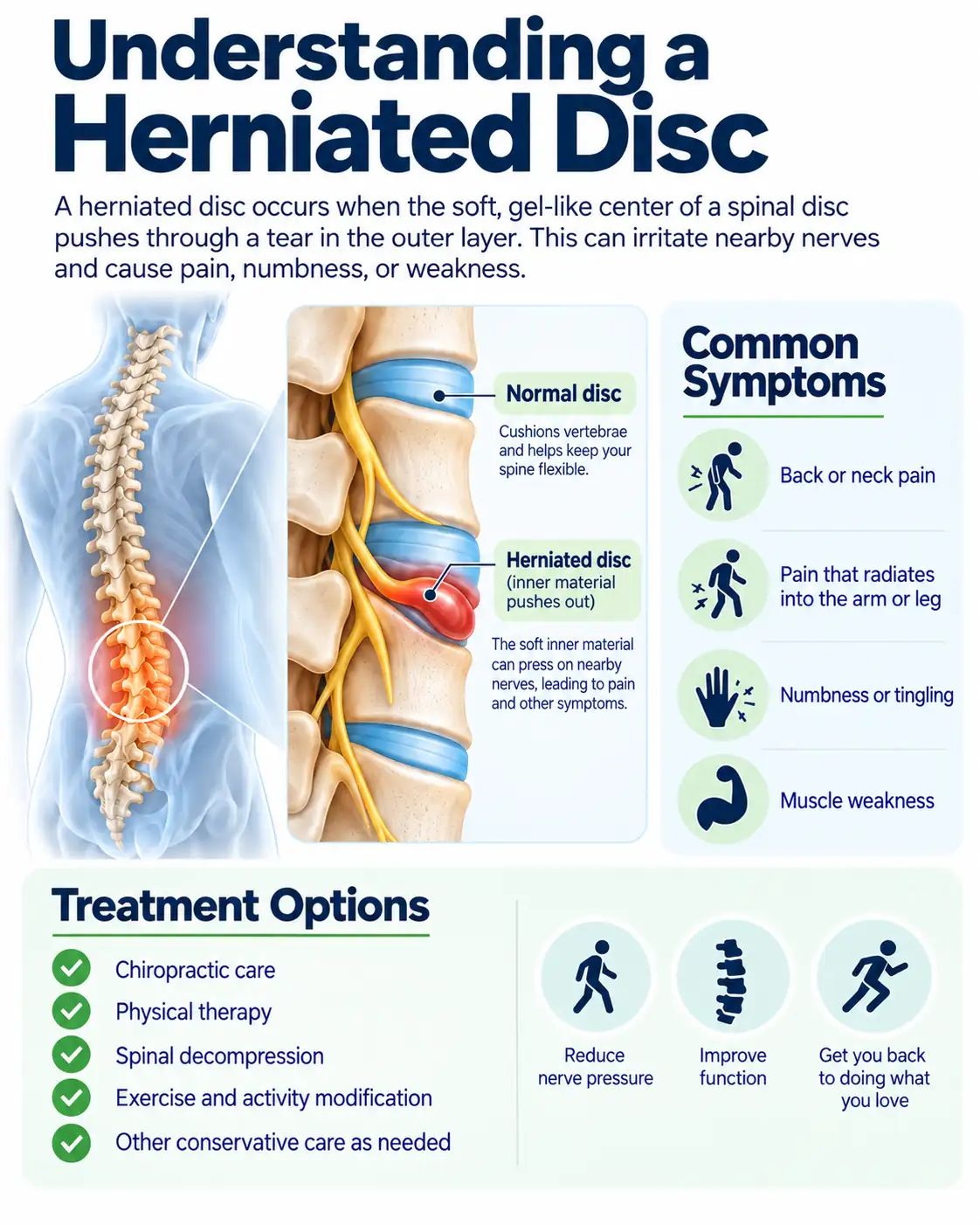
Your spine is made of stacked bones called vertebrae. Between many of those bones are flexible discs that act as cushions and help the spine absorb force while you move.
Each spinal disc has two main parts:
- A softer, gel-like center called the nucleus
- A tougher outer layer called the annulus
You can think of the disc as a shock-absorbing cushion between two vertebrae. These discs help your spine bend, twist, and handle the forces created by everyday movement.
What Is a Herniated Disc?
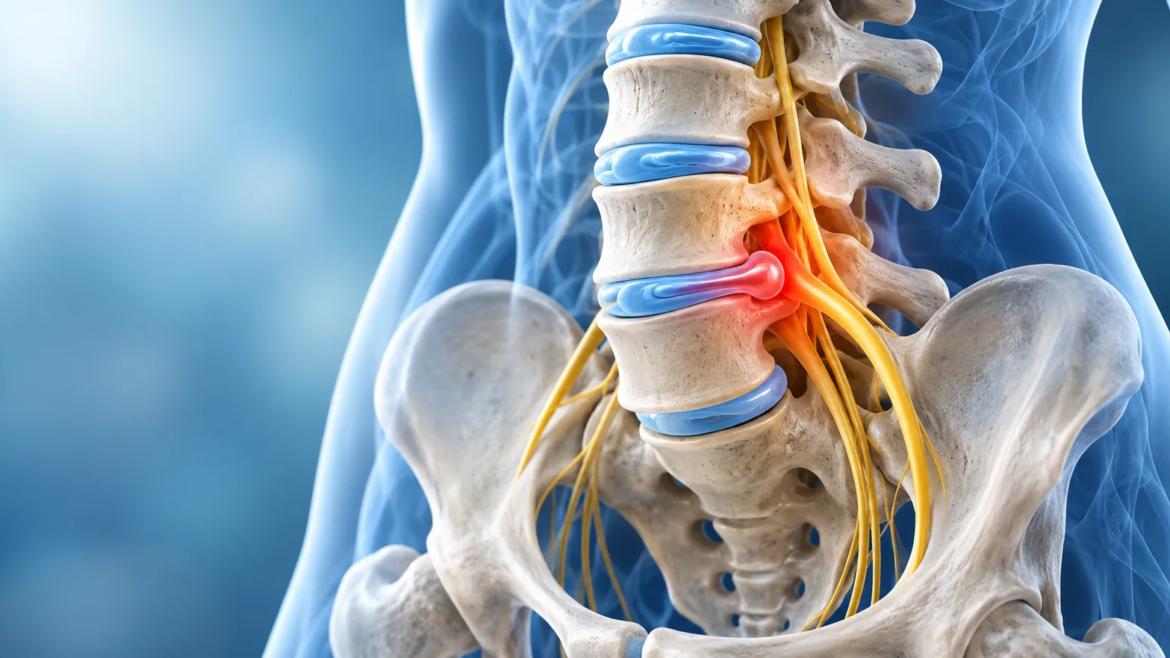
A herniated disc occurs when some of the softer material inside a spinal disc pushes through a tear or weakened area in the outer portion of the disc.
According to the Mayo Clinic, a herniated disc can irritate or compress a nearby nerve, potentially causing pain, numbness, tingling, or weakness.
A herniated disc can occur anywhere along the spine, although it is especially common in the lower back. Herniated discs can also occur in the neck.
Does a Disc Actually “Slip”?
“Slipped disc” is a common everyday term for a herniated disc, but the disc itself generally does not slide out of position.
Instead, material from inside the disc pushes outward through or into the tougher outer layer.
Other terms you may hear include:
- Herniated disc
- Ruptured disc
- Protruding disc
- Disc extrusion
- Bulging disc
Imaging reports can sound highly technical, so your symptoms and physical examination remain important when determining whether a disc finding is actually contributing to your pain.
Herniated Disc vs. Bulging Disc
A bulging disc and a herniated disc describe different patterns of disc displacement.
Bulging Disc
With a bulging disc, a broader portion of the outer disc extends outward beyond its usual boundary.
Herniated Disc
With a herniated disc, material from the softer center pushes farther into or through a weakened area in the outer layer.
The American Academy of Orthopaedic Surgeons explains that disc problems may be described using terms such as bulging, protruding, or herniated depending on the pattern and extent of disc displacement.
It is also important to know that imaging findings do not always match the severity of a person’s symptoms. Some people have a herniated disc without experiencing pain at all.
What Does a Herniated Disc Feel Like?
Symptoms depend on where the affected disc is located and whether it is irritating or compressing a nearby nerve.
Herniated Disc in the Lower Back
Possible symptoms may include:
- Low-back pain
- Buttock pain
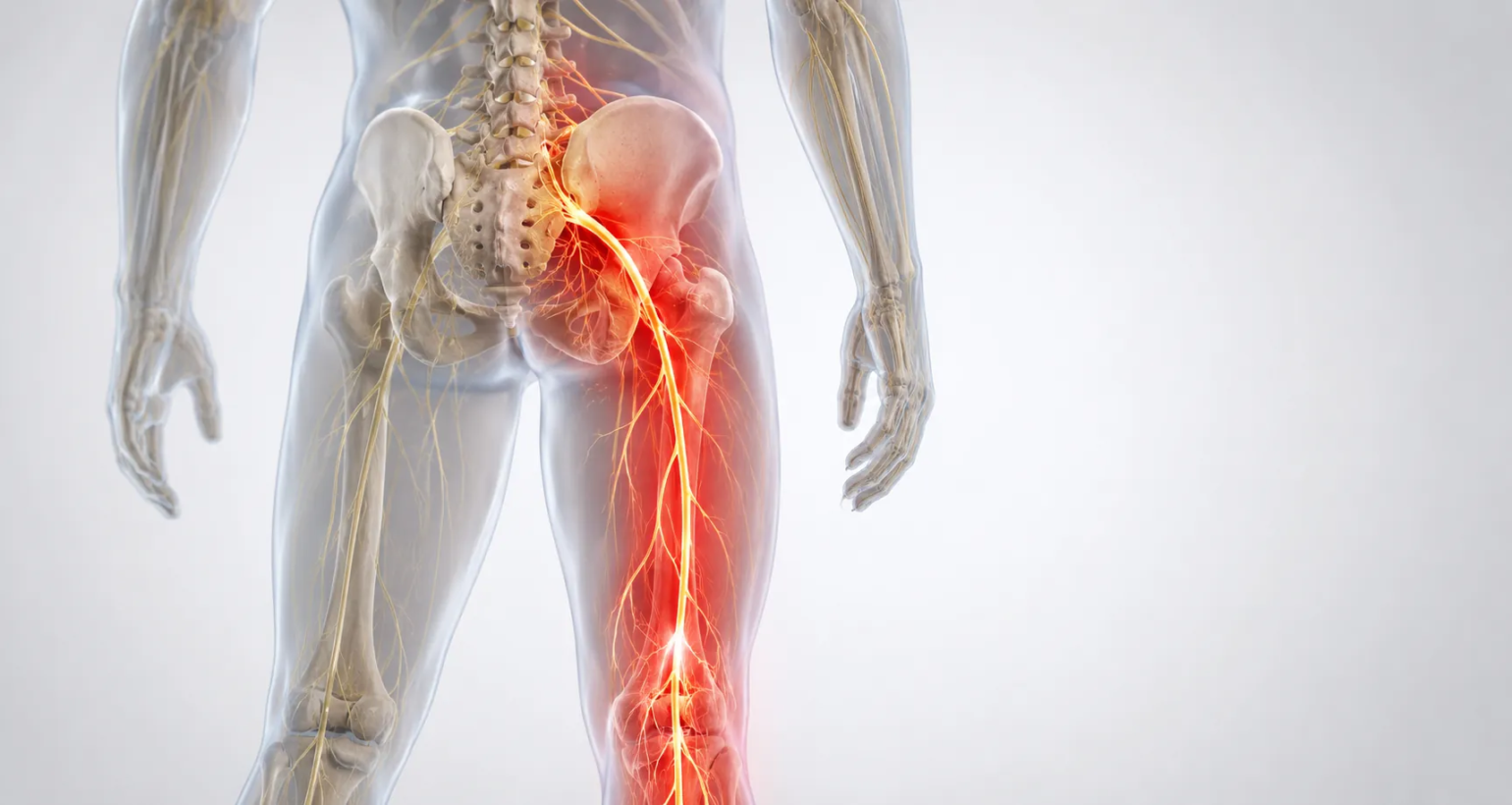
- Pain traveling down one leg
- Tingling or numbness
- Leg weakness
- Sciatica-like symptoms
Pain caused by nerve irritation may sometimes feel sharp, burning, electric, or radiating rather than remaining confined to the lower back.
Herniated Disc in the Neck
A cervical herniated disc may cause:
- Neck pain
- Shoulder pain
- Pain traveling into an arm
- Tingling in the hand or fingers
- Numbness
- Arm or hand weakness
What Causes a Herniated Disc?
Disc changes often develop gradually rather than happening during one dramatic event.
As spinal discs age, they can lose some of their flexibility and become more vulnerable to tearing or degeneration.
Other possible contributors include:
- Heavy lifting
- Repeated bending
- Twisting while lifting
- Physically demanding work
- Previous spine injuries
- Falls or trauma
- Repetitive stress on the spine
The Mayo Clinic notes that many people cannot identify one specific event that caused their herniated disc.
Does a Herniated Disc Always Require Surgery?
Most people with a herniated disc do not automatically require surgery.
Symptoms may improve with conservative treatment and time. The American Academy of Orthopaedic Surgeons notes that nonsurgical treatment is generally the initial approach for most lumbar herniated discs.
Depending on your symptoms and examination findings, conservative treatment may involve:
- Activity modification
- Physical therapy
- Therapeutic exercise
- Medication recommended by a physician
- Chiropractic care when clinically appropriate
- Spinal decompression when appropriate for the individual patient
At Everett Spine & Rehab, treatment can be coordinated across chiropractic care, physical therapy, and spinal decompression based on the patient’s symptoms, examination findings, and overall health history.
How Physical Therapy Can Help With Disc-Related Pain
Physical therapy may be helpful when a disc problem has affected your strength, mobility, posture, or ability to perform normal activities.
A physical therapy program may focus on:
- Improving spinal and hip mobility
- Strengthening muscles that support the spine
- Improving movement mechanics
- Gradually returning to work or exercise
- Reducing movements that repeatedly aggravate symptoms
The goal is to improve function while helping you move more comfortably and confidently.
When Are Herniated Disc Symptoms More Concerning?
Some symptoms require prompt medical attention.
Seek medical evaluation if back or neck pain is accompanied by significant weakness, progressive numbness, or increasing difficulty walking.
Loss of bowel or bladder control, numbness around the groin or inner thighs, or rapidly worsening neurological symptoms require urgent medical attention.
Frequently Asked Questions About Herniated Discs
Can a herniated disc heal?
Symptoms from many herniated discs improve over several weeks or months. The body may gradually reduce or reabsorb some of the herniated disc material over time. Recovery depends on the location of the disc, severity of symptoms, nerve involvement, activity level, and other individual factors.
Can a herniated disc cause sciatica?
Yes. A herniated disc in the lower back can irritate nerve roots that contribute to the sciatic nerve. This may cause pain, tingling, numbness, or weakness that travels from the lower back or buttock into the leg.
Learn more about sciatica from the Mayo Clinic.
Do I need an MRI to know if I have a herniated disc?
An MRI can provide detailed images of spinal discs, nerves, and other soft tissues, but imaging is not always required immediately. Your healthcare provider can determine whether imaging is appropriate based on your symptoms, physical examination, injury history, and response to conservative care.
Herniated Disc Treatment in Everett, WA
If back pain, neck pain, sciatica, tingling, numbness, or radiating pain is interfering with everyday life, the first step is understanding what may be causing your symptoms.
Everett Spine & Rehab provides chiropractic care, physical therapy, spinal decompression, and injury rehabilitation in Everett, WA for patients dealing with disc-related pain and mobility problems.
We also serve patients throughout Snohomish County, including Mill Creek, Lynnwood, Mukilteo, Lake Stevens, Marysville, Snohomish, Edmonds, Bothell, Monroe, and Mountlake Terrace.
Call Everett Spine & Rehab at (425) 347-8614 to schedule an evaluation and learn which treatment options may be appropriate for you.
Sources