
Why Am I Getting Muscle Spasms? Common Causes and When to Seek Care
Have you ever bent down to pick something up, turned your head while driving, or gotten out of bed only to feel a muscle suddenly tighten? Sometimes the pain catches you off guard, leaving you standing still because even the smallest movement makes it worse.
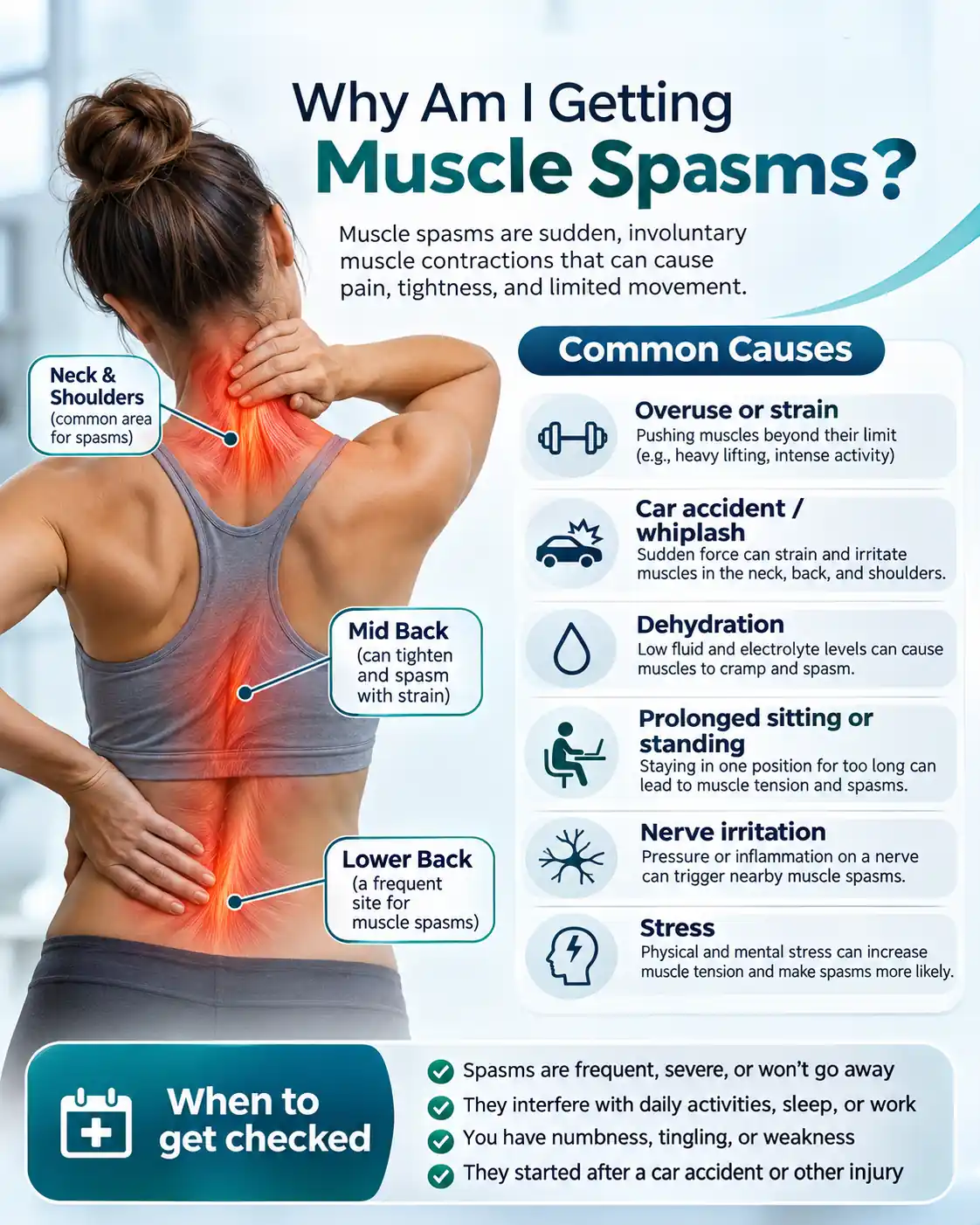
Muscle spasms can happen almost anywhere in your body, but they’re especially frustrating when they affect your back or neck. You might feel like your lower back has locked up, notice painful tightness between your shoulder blades, or experience neck stiffness that makes turning your head uncomfortable.
If this keeps happening, you’re probably wondering what’s causing it and whether it’s something you should have checked out.
What Exactly Is a Muscle Spasm?
A muscle spasm happens when a muscle contracts involuntarily, meaning it tightens without you consciously controlling it. The contraction may last only a few seconds or continue for several minutes, sometimes leaving the affected area sore afterward.
According to the Cleveland Clinic, muscle spasms can affect different parts of the body, including the neck, back, arms, legs, and abdomen.
Some spasms feel like a sudden cramp, while others create intense tightness that makes movement difficult. You may also notice tenderness, stiffness, or a hard knot in the affected muscle.
Why Am I Suddenly Getting Muscle Spasms?
There isn’t one explanation for every muscle spasm. Several factors can contribute, including everyday activities, injuries, and certain medical conditions.
1. Muscle Overuse or Strain
Have you spent the weekend gardening, moved heavy furniture, or increased your exercise routine? Muscles that aren’t accustomed to a particular activity may become fatigued or strained.
Repeated bending, lifting, twisting, and other physically demanding movements can contribute to soreness and muscle spasms, especially when the muscles haven’t had sufficient recovery time.
2. Car Accidents and Whiplash Injuries
Muscle spasms can develop after a car accident, even when the collision initially seems minor.
During a crash, sudden forces can strain the muscles and other soft tissues supporting your neck and back. A whiplash injury, for example, may cause neck stiffness, shoulder discomfort, headaches, and muscle spasms.
The American Academy of Orthopaedic Surgeons identifies muscle spasms and upper shoulder pain among possible symptoms of neck sprains, including those caused by whiplash.
You may notice your neck tightening when you look over your shoulder, discomfort between your shoulder blades, or lower back spasms when changing positions. These symptoms sometimes develop hours after the incident.
If you’re experiencing new muscle spasms following a collision in Everett or elsewhere in Snohomish County, an evaluation can help determine whether the symptoms are related to an injury that needs treatment.
3. Sitting or Standing in the Same Position Too Long
Spending hours at a desk, driving for work, or standing throughout a shift can contribute to muscle fatigue and stiffness.
For example, someone who sits for most of the day may develop tightness in the neck and shoulders, while a person performing repetitive physical tasks may notice discomfort in the lower back.
Remaining in one position for extended periods is also associated with certain types of muscle cramping, particularly when combined with fatigue or other contributing factors.
4. Dehydration and Electrolyte Imbalances
Muscles rely on proper fluid and electrolyte balance to function normally. Dehydration and changes in minerals such as potassium, magnesium, and calcium can increase the likelihood of cramping.
These issues may be more noticeable following intense exercise, heavy sweating, or inadequate fluid intake.
However, frequent spasms shouldn’t automatically be blamed on dehydration. Recurring symptoms may have another underlying cause that requires medical evaluation.
5. Nerve Irritation or Spinal Conditions
Sometimes muscle spasms occur alongside problems involving the spine or surrounding nerves.
Conditions such as a herniated disc or nerve compression may contribute to pain and muscle tightness. If you’re also experiencing tingling, numbness, weakness, or pain traveling into an arm or leg, those symptoms may indicate nerve involvement.
A healthcare provider can determine whether further examination or imaging is appropriate.
6. Stress, Medications, or Other Health Conditions
Stress can contribute to muscle tension, particularly around the neck and shoulders. Certain medications, thyroid disorders, and other medical conditions may also be associated with muscle cramps or spasms.
According to MedlinePlus, recurrent cramps can sometimes be related to medical conditions or medication effects, and occasionally the exact cause remains unknown.
This is one reason persistent muscle spasms deserve attention rather than simply assuming the muscles are overworked.
Why Does My Lower Back Keep Spasming?
Lower back spasms are particularly uncomfortable because the muscles in this area support many of your everyday movements, including standing, walking, bending, and lifting.
You might notice them after carrying something heavy, getting out of a chair, or turning awkwardly. In some cases, the affected muscles tighten so intensely that standing upright feels difficult.
Recurring lower back spasms can be associated with muscle strain, physical overuse, or certain spinal conditions. An examination can help identify which structures may be contributing to the discomfort.
What Can I Do When a Muscle Spasm Happens?
If a muscle suddenly tightens, stop the activity that triggered it and avoid forcing yourself through a painful movement.
Depending on the location and cause of the spasm, gentle movement, comfortable stretching, or applying warmth may help ease the tightness. Cold packs can sometimes be useful when soreness follows a recent strain.
Staying hydrated and avoiding activities that repeatedly aggravate the area may also help. If the spasm began after an accident or another significant injury, seek an appropriate medical assessment before attempting stretching or manipulation.
Can a Chiropractor Help With Muscle Spasms?
Chiropractic care may be helpful when muscle spasms are associated with certain musculoskeletal problems, including back or neck pain and movement restrictions.
At Everett Spine & Rehab, an evaluation can help identify possible contributing factors, such as muscle strain, joint mobility limitations, or injuries involving the spine.
Depending on your condition, treatment may include chiropractic adjustments or mobilization, movement recommendations, and rehabilitation exercises. Physical therapy may also be appropriate when improving strength, flexibility, and movement control is part of your recovery plan.
Because spasms can have non-musculoskeletal causes, chiropractic treatment isn’t appropriate for every situation. When symptoms suggest a neurological, metabolic, or other medical condition, additional evaluation or referral may be needed.
When Should You Worry About Muscle Spasms?
An occasional muscle spasm after physical activity may resolve on its own, but it’s worth seeking medical advice if your spasms:
- Keep returning without an obvious explanation
- Are becoming more painful or frequent
- Interfere with sleep, work, or normal activities
- Started after a car accident, fall, or other injury
- Are accompanied by numbness, tingling, or muscle weakness
- Last longer than expected or don’t improve with basic self-care
Seek emergency medical attention for back pain accompanied by new loss of bladder or bowel control, numbness around the groin, or significant or worsening leg weakness. Severe symptoms following a major accident also require urgent evaluation.
Frequently Asked Questions About Muscle Spasms
Why am I getting muscle spasms even when I haven’t exercised?
Muscle spasms can occur without exercise. Prolonged sitting, stress, dehydration, medications, nerve irritation, and certain medical conditions may contribute.
Can whiplash cause muscle spasms days after a car accident?
Yes. Whiplash symptoms may appear hours after an injury, and some people notice increasing stiffness or muscle discomfort over the following days. New or worsening symptoms after a collision should be evaluated.
Why does my back suddenly lock up when I bend over?
A sudden sensation of your back locking up may occur with a painful muscle spasm, sometimes associated with muscle strain or another spinal problem. An examination can help identify the cause, particularly when episodes recur.
How long do muscle spasms usually last?
Individual spasms may last seconds to several minutes, although muscle soreness can continue afterward. Persistent or frequently recurring spasms should be assessed by a healthcare provider.
Should I see a chiropractor or physical therapist for muscle spasms?
That depends on the suspected cause. Chiropractic care or physical therapy may be appropriate for certain musculoskeletal conditions, but symptoms related to medications, electrolyte imbalances, or other medical disorders may require medical testing and treatment.
Experiencing Recurring Back or Neck Spasms in Everett, WA?
When muscle spasms start interfering with your ability to work, drive, exercise, or move comfortably, understanding the underlying cause is an important first step.
Everett Spine & Rehab offers chiropractic care and physical therapy for patients experiencing back pain, neck discomfort, and musculoskeletal injuries.
We serve patients throughout Everett and surrounding Snohomish County communities, including Mill Creek, Mukilteo, Marysville, and Lynnwood.
Contact Everett Spine & Rehab to schedule an evaluation and learn which treatment options may be appropriate for your symptoms.