

Why Does My Ankle Still Hurt Weeks After a Sprain?
It’s been three or four weeks since you rolled your ankle, and you expected to be walking normally by now. The bruising has faded, and the swelling has gone down, but walking downstairs still hurts. Maybe your ankle feels stiff when you get out of bed, or it starts aching again after you’ve spent a few hours on your feet.
If your ankle still hurts weeks after a sprain, you might wonder whether it’s healing normally or whether something else is going on.
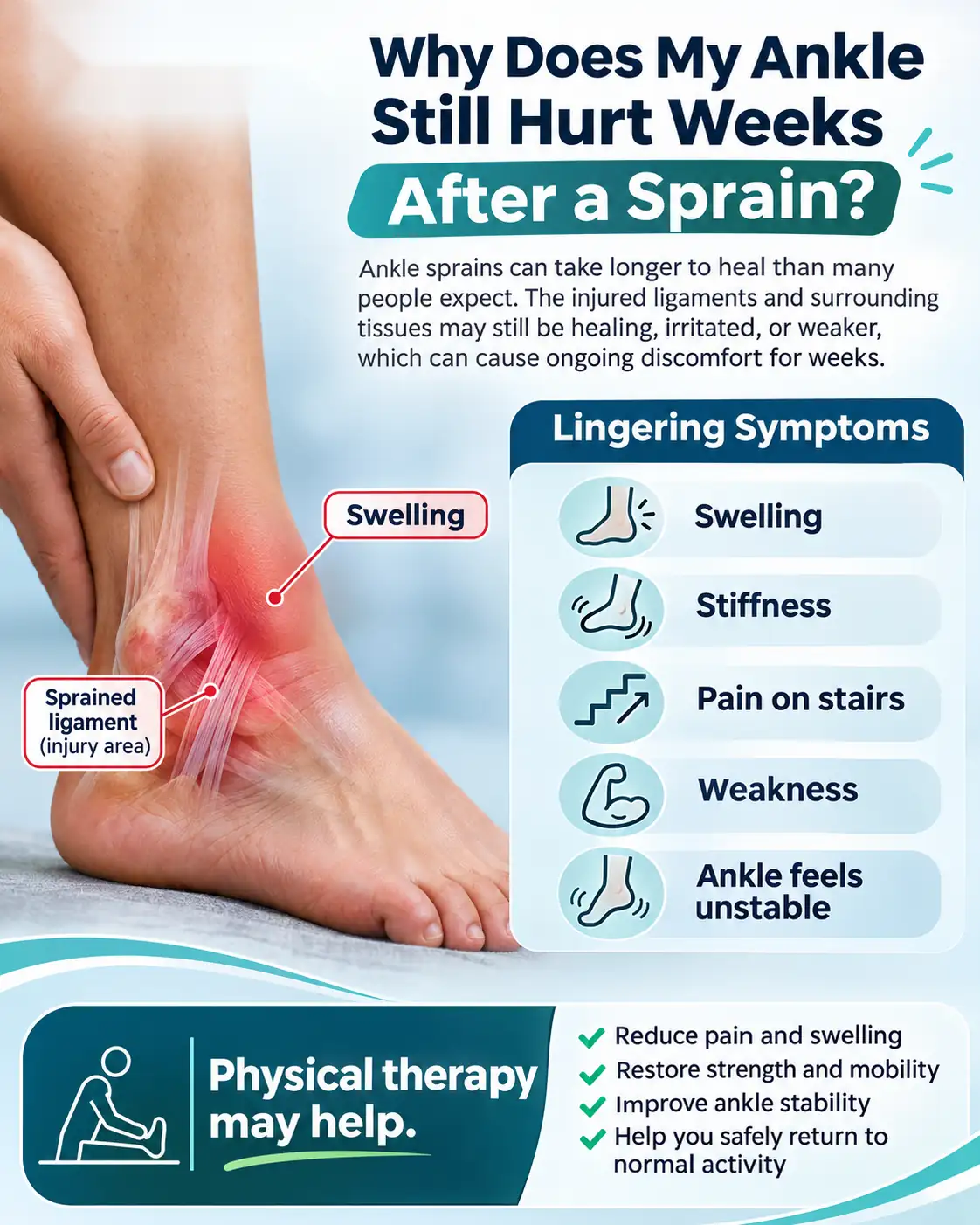
Ankle sprains can take longer to recover from than many people expect, particularly when the ligaments have been significantly damaged or the ankle hasn’t regained its strength and stability.
How Long Does an Ankle Sprain Take to Heal?
An ankle sprain occurs when the ligaments supporting your ankle become overstretched or torn, usually after the foot rolls or twists unexpectedly.
According to Yale Medicine, recovery generally depends on the severity of the injury.
- Mild sprain (Grade 1): Approximately 1–2 weeks.
- Moderate sprain (Grade 2): Approximately 3–6 weeks.
- Severe sprain (Grade 3): Often 6–12 weeks or longer.
These timelines are estimates. Returning to sports or physically demanding work may take longer than returning to ordinary walking.
Why Is My Ankle Still Hurting After Several Weeks?
1. Your Ligaments Are Still Healing
Even when swelling improves, injured ligaments may still be recovering. More significant sprains can involve partial or complete tears that require additional time and rehabilitation.
2. Your Ankle Has Become Stiff or Weak
After an injury, you naturally avoid movements that cause discomfort. Reduced activity or temporary immobilization may contribute to stiffness and muscle weakness.
You might notice discomfort when climbing stairs, walking downhill, or trying to balance on the injured foot.
3. You Returned to Activity Too Soon
Returning to running, long walks, or demanding work shifts before your ankle has regained adequate strength and control can aggravate symptoms.
Feeling better while resting doesn’t necessarily mean your ankle is ready for every activity.
4. Your Ankle Feels Unstable
Does your ankle feel like it might give out when stepping off a curb or walking across uneven pavement?
Ligament damage can affect the stability of the joint and your body’s ability to sense its position, a function known as proprioception. Without adequate rehabilitation, some people develop recurring sprains or chronic ankle instability.
5. There May Be Another Injury
Persistent pain may occasionally involve tendon damage, cartilage injuries, or a fracture that wasn’t initially identified.
If your ankle isn’t improving as expected, a healthcare provider can determine whether additional examination or imaging is appropriate.
Does Age Affect Ankle Sprain Recovery After 40 or 50?
You don’t have to be an athlete to sprain your ankle. An awkward step, uneven sidewalk, or missed stair can cause an injury at almost any age.
If you’re over 40 or 50, recovery may be influenced by changes in strength, balance, joint mobility, and existing conditions such as arthritis.
However, age doesn’t automatically mean your ankle will heal slowly. The severity of the sprain, previous injuries, general health, and rehabilitation all play important roles.
Clinical physical therapy guidelines recommend considering age alongside symptoms, balance, ankle movement, and previous sprains when evaluating recovery.
What Do Different Ankle Symptoms Mean?
Pain on the outside of the ankle: Often associated with a lateral ankle sprain, where ligaments along the outer ankle become injured.
Pain when walking downstairs: May be related to limited ankle mobility, weakness, or ongoing irritation.
Swelling after standing: Some swelling may persist during recovery, although increasing or significant swelling should be assessed.
Ankle clicking or catching: Clicking alone isn’t always concerning, but painful catching or repeated instability can indicate another problem.
Ankle keeps rolling: Repeated episodes may suggest ongoing weakness or instability that could benefit from rehabilitation.
How Can Physical Therapy Help a Sprained Ankle?
Physical therapy can help address lingering symptoms while gradually restoring your ability to move comfortably and confidently.
At Everett Spine & Rehab, a physical therapy evaluation considers your ankle mobility, strength, balance, injury history, and the activities you’re having difficulty performing.
Depending on your condition, rehabilitation may include controlled mobility exercises, progressive strengthening, balance training, and activities that prepare you to return to work, exercise, or everyday movement.
Treatment is adjusted to your symptoms and healing stage rather than following the same schedule for everyone.
Frequently Asked Questions
Is it normal for my ankle to still be swollen after three weeks?
Some swelling can continue for several weeks, especially after a moderate or severe sprain. Persistent, increasing, or significant swelling should be evaluated.
Why does my ankle hurt more at night?
Discomfort may become more noticeable after a day of walking or standing, particularly when swelling or irritation increases with activity.
Can an ankle sprain cause pain months later?
Yes. Some people experience lingering discomfort or instability after an ankle sprain, especially following more severe injuries or repeated sprains.
When should I see a physical therapist?
Consider an evaluation if you’re still limping, experiencing repeated instability, or having difficulty returning to normal activities. Seek urgent medical care for severe pain, deformity, numbness, or an inability to bear weight following an injury.
Physical Therapy for Ankle Pain in Everett, WA
Lingering ankle pain can make simple activities like climbing stairs, walking through the grocery store, or standing through a work shift uncomfortable.
Everett Spine & Rehab provides physical therapy for musculoskeletal injuries and movement limitations, serving Everett, Lynnwood, Mill Creek, Mukilteo, and surrounding Snohomish County communities.
If your ankle still hurts weeks after a sprain, contact Everett Spine & Rehab to schedule an evaluation and learn more about your rehabilitation options.