


Minor Car Accident, Major Pain? When a Fender Bender Can Still Lead to Chiropractic Treatment in Everett, WA
A fender bender can leave very little damage on the car and still leave your body sore, stiff, and irritated for days. That catches people off guard all the time. The crash feels small, the adrenaline wears off, and then the neck tightens, the low back starts aching, or a headache shows up by the end of the day. In Everett, where summer driving, weekend trips, and heavier seasonal traffic pick up, these lower-speed crashes become part of the same auto injury story we see every year.
The National Highway Traffic Safety Administration highlighted the summer travel season in its 2026 Click It or Ticket campaign, a useful reminder that busier roads bring more opportunities for collisions of every size. Research on people evaluated after motor vehicle collisions also shows that musculoskeletal pain is common in the first 48 hours after a crash, even when patients are discharged home rather than admitted to the hospital.
Why a fender bender can still lead to pain
The term minor accident usually describes vehicle damage, not the force your spine, shoulders, and surrounding soft tissues absorbed. In a lower-speed collision, the body still braces, twists, and absorbs a fast change in motion. MedlinePlus notes that back injuries can happen from a sudden jolt such as a car accident, and common problems include sprains, strains, herniated discs, and fractured vertebrae. Even when the injury turns out to be muscular or joint-related rather than severe, it can still make driving, sleeping, working at a desk, or lifting feel much harder than usual.
Another reason symptoms feel confusing is timing. Some people hurt right away. Others wake up sore the next morning or feel worse over the next two or three days as inflammation builds and the muscles stay guarded. Experimental collision research published in PMC has described short-term muscular responses and symptom patterns that become more noticeable over the first several days after impact.
Common symptoms after a fender bender
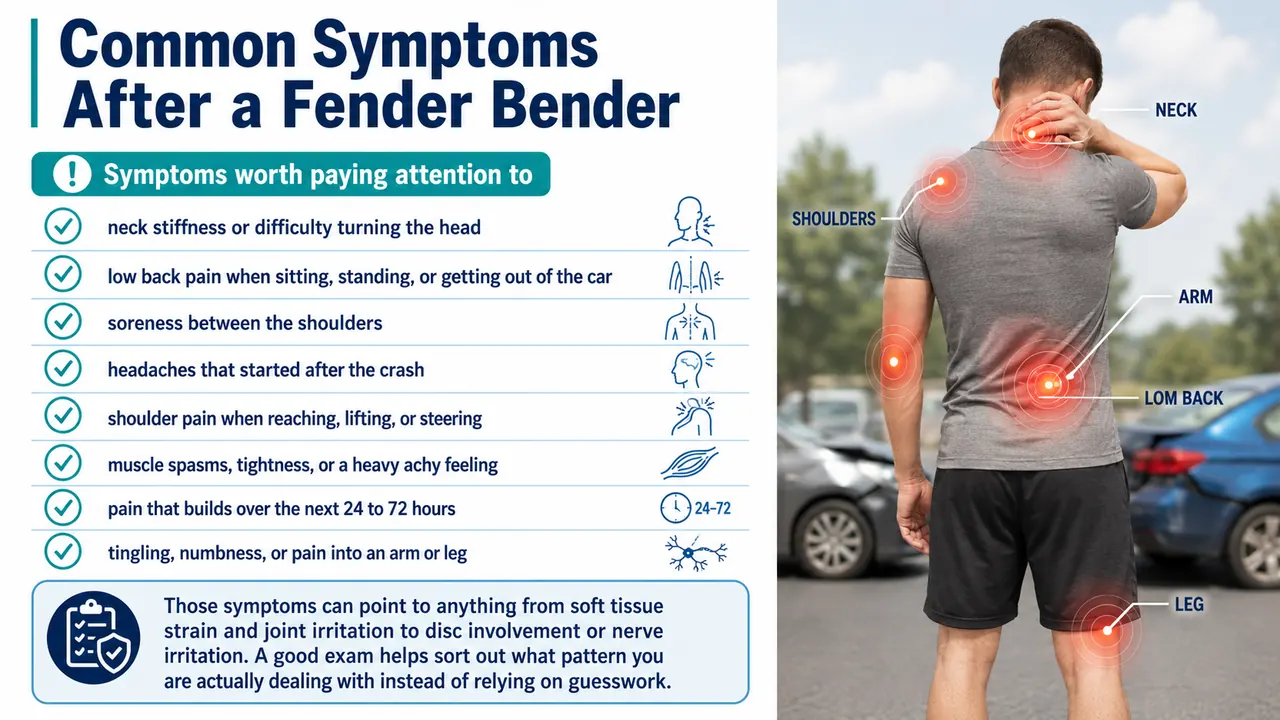
Symptoms worth paying attention to
- neck stiffness or difficulty turning the head
- low back pain when sitting, standing, or getting out of the car
- soreness between the shoulders
- headaches that started after the crash
- shoulder pain when reaching, lifting, or steering
- muscle spasms, tightness, or a heavy achy feeling
- pain that builds over the next 24 to 72 hours
- tingling, numbness, or pain into an arm or leg
Those symptoms can point to anything from soft tissue strain and joint irritation to disc involvement or nerve irritation. A good exam helps sort out what pattern you are actually dealing with instead of relying on guesswork.
A quick checklist: when to get checked
Schedule an evaluation if
- pain is building instead of easing
- driving, desk work, or sleep feel harder than usual
- you are relying on pain relievers just to get through the day
- you feel stiffness across the neck, back, or shoulders
- you notice tingling, numbness, or pain into an arm or leg
- you are moving differently to avoid discomfort
- the symptoms are affecting work, workouts, or normal daily tasks
When chiropractic care may help after a minor car accident
Chiropractic care after a fender bender often focuses on restoring movement, reducing joint irritation, and helping the body move more comfortably as the irritated tissues calm down. For some patients, the main issue is in the neck or upper back. For others, the low back, pelvis, or shoulder mechanics are driving the pain pattern. A chiropractic evaluation can also help identify when rehab-focused physical therapy belongs in the plan, especially when strength, stability, or return to activity need more attention.
At Everett Spine & Rehab, that chiropractic-first approach fits many auto injury cases well. The goal is to understand what changed after the crash and build care around function, movement, and recovery rather than simply waiting to see how long the soreness lasts.
Red flags that deserve urgent medical attention
Seek prompt medical care if you have
- significant weakness in an arm or leg
- bowel or bladder changes
- severe pain that is escalating quickly
- major dizziness, confusion, or loss of consciousness
- numbness that is spreading
- difficulty walking or using a limb normally

FAQ
Can a minor car accident really cause lasting pain?
Yes. Lower-speed crashes can still create joint irritation, muscle strain, and movement problems that become more noticeable over the next few days.
How soon should I see a chiropractor after a fender bender?
If pain, stiffness, headaches, or reduced range of motion are affecting daily life, getting checked early can help clarify what structures may be involved and what kind of care makes sense.
What symptoms are common after a fender bender?
Neck pain, headaches, soreness between the shoulders, low back pain, shoulder pain, muscle tightness, and sometimes tingling or numbness are all common post-collision complaints.
Can chiropractic care help after a minor car accident in Everett, WA?
It may help when symptoms involve stiffness, joint restriction, muscular guarding, and pain with normal movement. A proper exam helps determine the right next step.
If you are dealing with pain after a fender bender in Everett, WA, getting checked early can help you understand what is driving the symptoms and whether chiropractic care should be part of your recovery plan.