


Headaches After a Car Accident in Everett, WA: Causes, Symptoms, and When to Seek Care
A headache after a car accident can be unsettling, especially when it appears hours or even days after the collision. You may have walked away feeling relatively fine, only to notice pressure behind your eyes, pain at the base of your skull, or a persistent headache that makes it difficult to concentrate.
While headaches can develop for several reasons following a collision, they should never be automatically dismissed as ordinary tension or stress. A headache after an accident may be associated with a neck injury, whiplash, concussion, or another condition requiring medical attention.
Understanding the possible causes and accompanying symptoms can help you recognize when an evaluation is necessary.
Why Do Headaches Happen After a Car Accident?
During a collision, the sudden force can cause your head and neck to move rapidly, placing stress on muscles, joints, ligaments, and other structures.
Depending on the circumstances, several conditions may contribute to post-accident headaches.
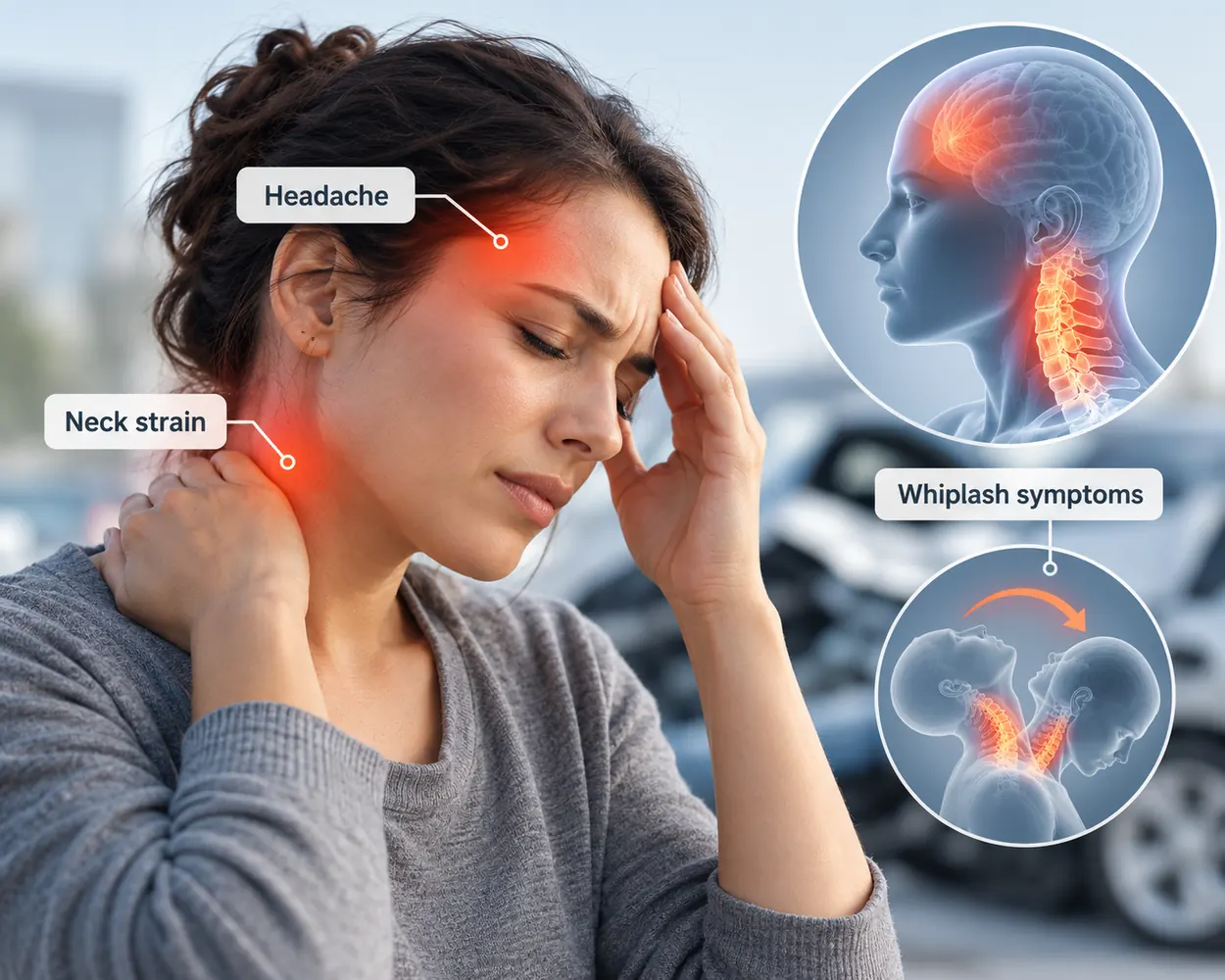
1. Whiplash and Neck Injuries
Whiplash occurs when the neck is subjected to a rapid acceleration and deceleration movement, commonly associated with rear-end collisions.
Symptoms can include:
- Neck pain, stiffness, or reduced mobility
- Headaches beginning near the base of the skull
- Tenderness across the shoulders and upper back
- Discomfort when turning the head
- Muscle tightness or spasms
Some people notice neck discomfort immediately, while others develop symptoms later.
2. Cervicogenic Headaches
A cervicogenic headache originates from a problem affecting structures in the cervical spine, or neck.
According to the Cleveland Clinic, this type of headache may begin at the back of the head and extend toward the forehead or behind an eye.
Common symptoms include one-sided headaches, reduced neck movement, and pain that worsens when moving the neck.
Because these headaches can resemble other headache disorders, identifying the underlying cause requires a professional evaluation.
3. Concussion or Mild Traumatic Brain Injury
A concussion can happen when a sudden impact or rapid movement causes the brain to move within the skull. You do not necessarily have to strike your head directly to sustain a concussion.
The Centers for Disease Control and Prevention (CDC) identifies headaches, dizziness, nausea, sensitivity to light, concentration difficulties, and changes in sleep among potential concussion symptoms.
These symptoms can appear immediately or develop hours or days after the injury.
Anyone experiencing a new headache following a collision should receive an appropriate medical assessment, especially if other concussion symptoms are present.
What Does a Whiplash Headache Feel Like?
People with neck-related headaches often describe an aching sensation beginning near the upper neck or back of the skull. The discomfort may spread toward the temples, forehead, or behind one eye.
You may also notice that:
- Turning your head increases the discomfort.
- Your neck feels unusually tight when you wake up.
- Sitting at a desk or driving makes symptoms more noticeable.
- Headaches occur alongside shoulder or upper-back stiffness.
However, headache location alone cannot determine whether whiplash, concussion, or another condition is responsible.
When Should You Be Concerned About a Headache After an Accident?
Headaches following trauma deserve medical attention, particularly when they are new, persistent, or worsening.
Seek emergency medical care immediately if you experience a headache that gets progressively worse and will not go away, repeated vomiting, unusual confusion, weakness, slurred speech, seizures, or difficulty staying awake.
These symptoms may indicate a potentially serious brain injury. The CDC’s concussion guidance explains these warning signs in greater detail.
If symptoms are stable but continue after the accident, arrange a prompt medical evaluation rather than waiting to see whether the problem disappears.
Can Chiropractic Care Help With Headaches After a Car Accident?
For certain patients, headaches associated with neck dysfunction may respond to conservative treatment after serious injuries and other medical causes have been evaluated.
At Everett Spine & Rehab, care for appropriate musculoskeletal injuries may involve assessing neck movement, muscle tenderness, joint function, and other physical limitations associated with the collision.
Depending on the diagnosis and medical clearance, treatment may include chiropractic care, therapeutic exercises, mobility work, or rehabilitation.
Patients with suspected concussion, serious cervical injury, or neurological symptoms require appropriate medical assessment and management before considering cervical manipulation.
Frequently Asked Questions
Is it normal to have headaches days after a car accident?
Headaches can appear hours or days after a collision, particularly when neck injuries or concussion are involved. Although delayed symptoms can occur, a new headache after trauma should be evaluated rather than assumed to be harmless.
Can whiplash cause headaches without severe neck pain?
Yes. Some people experience headaches as a prominent symptom of a neck-related injury even when neck pain is relatively mild. Other conditions can cause similar symptoms, so an assessment is necessary.
How long do headaches last after a car accident?
Recovery depends on the underlying injury, symptom severity, and individual health factors. Some headaches resolve relatively quickly, while others persist and require additional assessment or treatment.
Should I see a chiropractor for a headache after an accident?
Start with a medical evaluation to rule out concussion, serious neck injuries, and other complications. When headaches are associated with an appropriate musculoskeletal condition, chiropractic care or rehabilitation may be considered as part of a treatment plan.
Auto Accident Injury Care in Everett, WA
Headaches following a car accident can interfere with work, sleep, driving, and everyday activities. Finding out what’s causing your symptoms is an important first step toward appropriate care.
Everett Spine & Rehab provides chiropractic and rehabilitation services for patients dealing with musculoskeletal injuries following auto accidents.
We serve Everett and surrounding Snohomish County communities, including Mukilteo, Mill Creek, Marysville, and Lynnwood.
Contact Everett Spine & Rehab to learn more about our auto accident injury services or schedule an evaluation following appropriate medical assessment.