
Holiday Stress and Your Body: How It Shows Up Physically in Everett & Snohomish County
How common is holiday stress?
You’re not imagining it if the holidays feel “extra.” One recent survey cited by the American Library Association–APA partnership reported that 89% of Americans feel stressed during the holidays, and 41% say their stress actually increases compared with the rest of the year. ala-apa.org
The American Psychological Association also notes that the holiday season can bring unique stressors: financial strain, social obligations, family dynamics, travel, and grief for those missing loved ones. American Psychological Association
When that stress isn’t managed, your nervous system stays in “fight-or-flight” mode, and your body starts sending signals.
Physical signs that holiday stress is affecting your body
Chronic stress isn’t just a mood issue. Mayo Clinic explains that ongoing stress can contribute to: headaches, muscle tension and pain, digestive problems, sleep issues, weight changes, and higher risk of heart disease and high blood pressure. Mayo Clinic+1
During the holidays, you might notice:
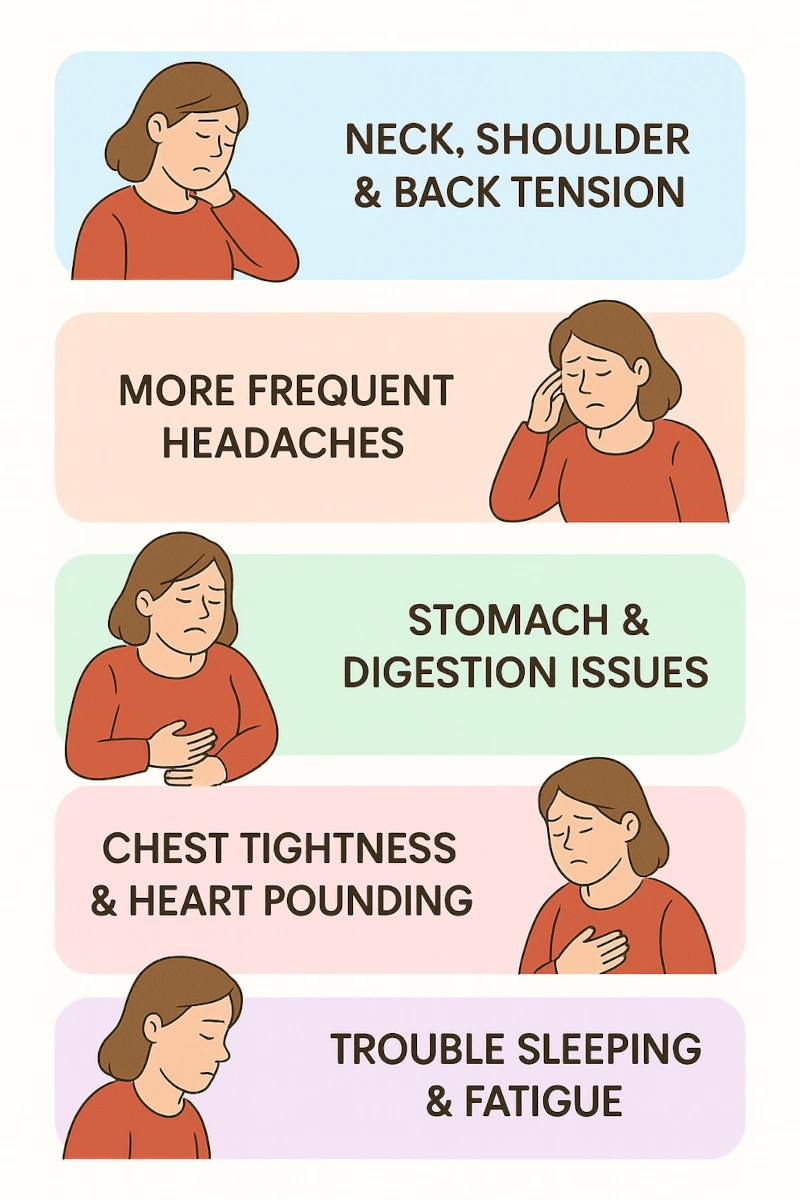
Neck, shoulder, and back tension
Hunching over gift lists, cooking for hours, and more time driving on wet Snohomish County roads can tighten the muscles around your spine. That tension can trigger headaches and flare old injuries.More frequent headaches
Stress hormones, muscle tightness in the neck and shoulders, skipped meals, and irregular sleep can combine to create tension headaches or migraines.Stomach and digestion issues
The stress response affects your digestive tract, which can show up as nausea, heartburn, cramps, or changes in bowel habits—especially when combined with rich holiday foods. Mayo ClinicChest tightness and heart pounding
Cleveland Clinic notes that chronic stress can change how your cardiovascular system functions and contribute to heart disease over time. Cleveland Clinic If you ever have chest pain, shortness of breath, or symptoms that feel like an emergency, call 911 or seek urgent medical care right away.Trouble sleeping and constant fatigue
Stress hormones make it hard to wind down. Late-night events, screen time, and worry can lead to shallow or disrupted sleep, leaving you exhausted by mid-December.
If you’re noticing these patterns—and they get worse when life gets busier—that’s your body asking for support, not just “more willpower.”
Why holiday stress can hit harder in Snohomish County
Living in Everett, Lynnwood, Mukilteo, Mill Creek, Marysville, Lake Stevens, or nearby areas brings its own holiday quirks:
Dark, rainy days can lower energy and motivation to move.
I-5 and local traffic increase travel time for shopping, events, and commuting.
Outdoor plans are more likely to get rained out, so people sit more and move less.
Seasonal illnesses add extra strain to families with kids in local schools.
All of that can mean more time tense, hunched, and stressed—and less time recovering.
Body-based tips to ease holiday stress
Here are practical, realistic ways to help your body through the season.
1. Schedule “movement snacks”
You don’t need a perfect workout plan. Aim for small bursts of movement:
5–10 minute walks around your Everett or Snohomish neighborhood between tasks
Gentle stretching during TV time
A quick loop on the Interurban Trail, Lowell Riverfront Trail, or around Paine Field area between errands
Gentle movement helps circulation, loosens tight muscles, and supports mood and sleep.
2. Protect your neck, shoulders, and back
Adjust your screen so it’s at eye level when online shopping.
Keep feet flat on the floor and avoid slouching forward.
Take a short standing or stretching break every 30–45 minutes while working or wrapping gifts.
If you’re feeling persistent stiffness or sharp pain, chiropractic care, physical therapy, and massage can help restore proper alignment, release trigger points, and retrain posture patterns.
3. Build a simple wind-down routine
Mayo Clinic suggests planning ahead and setting realistic expectations to reduce holiday stress; a calm evening routine is part of that. Mayo Clinic Health System Try:
Turning off bright screens 30–60 minutes before bed
Taking a warm shower, using a heating pad, or doing 3–5 gentle stretches
Practicing slow breathing: inhale through your nose for 4 counts, exhale through your mouth for 6–8 counts, repeat for a few minutes
These habits signal your nervous system to shift from “go” mode into “rest-and-digest.”

4. Set kinder boundaries
Stress often spikes when your calendar is fuller than your energy. Consider:
Saying yes only to the events that truly matter to you or your family
Setting a budget and sticking to it to reduce financial strain
Planning one “no plans” evening each week in December for rest and recovery
Remember: protecting your health is not selfish—it’s how you stay present for the people you care about.
5. Use hands-on care as part of your toolkit
If stress is showing up as:
Frequent headaches
Tight neck and shoulders
Low back pain
General muscle stiffness or limited mobility
Chiropractic adjustments, physical therapy exercises, and massage therapy can:
Improve joint mobility and posture
Reduce muscle tension and trigger points
Support circulation and recovery
Help your body handle day-to-day stress with less pain
Our Everett team regularly sees patients from across Snohomish County who notice that when their spine and muscles feel better, their mood, sleep, and energy follow.
When to reach out for more help
Holiday stress is common, but you shouldn’t ignore:
Chest pain, severe shortness of breath, or sudden weakness (call 911).
Ongoing sadness, anxiety, or hopelessness that lasts more than a couple of weeks.
Pain that is sharp, radiating, or not improving with home care.
For emotional or mental health support, consider talking with your primary care provider or a licensed counselor. For physical symptoms like neck pain, back pain, headaches, or joint stiffness, a local chiropractic, physical therapy, and massage clinic in Everett can be a helpful part of your care plan.
If you live in Everett, Snohomish, Lynnwood, Mukilteo, Mill Creek, Marysville, or nearby, our team is here to help your body move easier so you can actually enjoy the season—not just push through it.