

February Posture Reset: Why Desk Work + Cold Weather Triggers Neck Pain & Headaches—and How Chiro, Physical Therapy, and Massage Help
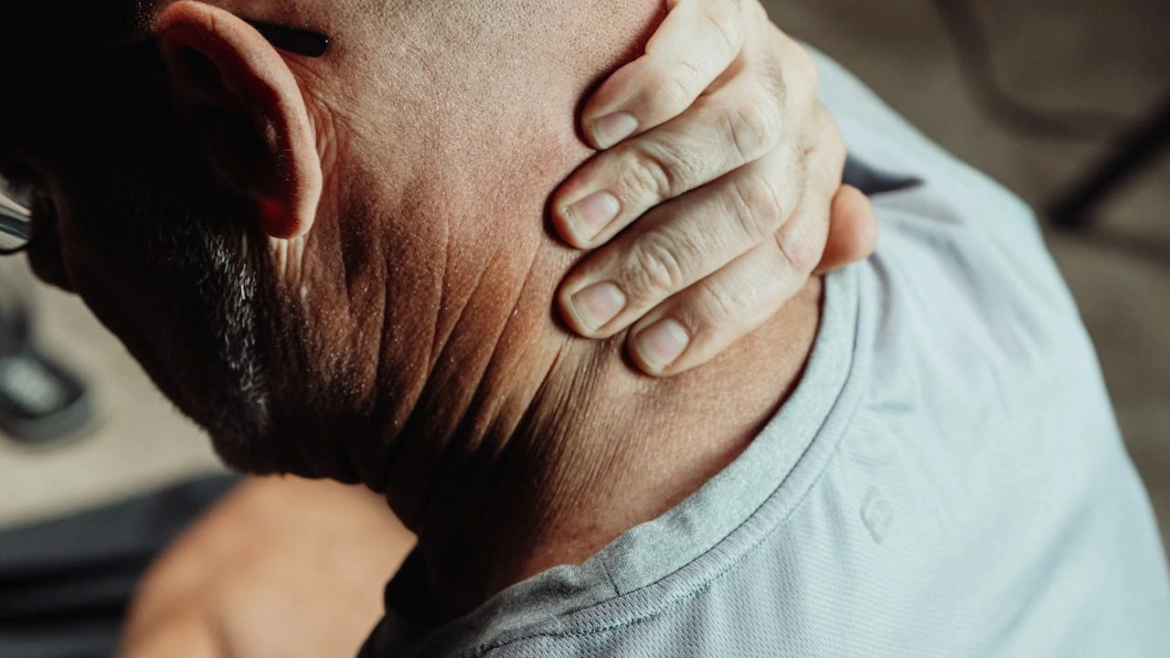
February in Everett and Snohomish County is peak “hunched season.” Cold mornings, rainy commutes, more time indoors, and long hours at a desk can quietly stack up—until you realize you’re dealing with nagging neck tightness, upper back stiffness, tension headaches, or even tingling into the shoulders and arms.
The good news: posture-related pain is often very treatable. At an Everett chiropractic, physical therapy, and massage therapy clinic, we see this pattern constantly—especially from patients in Everett, Mill Creek, Lynnwood, Bothell, Mukilteo, and surrounding areas who sit for work, drive long distances, or spend evenings on the couch scrolling.
Why February makes posture pain worse
A few seasonal factors tend to amplify “tech neck” and desk-related strain:
Cold-weather guarding: When you’re chilly, your shoulders rise and your neck muscles brace. That tension can become your new normal.
Less movement: Fewer walks and outdoor activities = stiffer joints and tighter soft tissue.
More screen time: Winter evenings often mean more phone, laptop, gaming, or TV time—usually with a forward head posture.
Stress + sleep changes: Busy schedules, short daylight hours, and stress can tighten the jaw/neck/upper traps and contribute to headaches.
Common symptoms we see from desk posture
If you’re in Snohomish County and noticing any of these, posture strain may be the culprit:
Neck stiffness or limited range of motion
Tight shoulders or “knots” in the upper traps
Upper back pain between the shoulder blades
Tension headaches (often starting at the base of the skull)
Jaw tension, clenching, or TMJ irritation
Numbness/tingling down the arm (from irritated nerves or tight muscles)
Pain that flares after driving, working, or scrolling
When posture pain isn’t “just posture”
Sometimes people assume they simply need a new pillow or a better chair. Those can help, but if symptoms are persistent, it often means the body needs more than a quick fix.
You should consider an evaluation if:
Pain lasts more than 7–10 days
Headaches are recurring or increasing
You feel tingling, numbness, weakness, or radiating pain
You’re avoiding normal activities because it “flares everything up”
Your neck pain started after a minor injury, fall, or fender bender
How chiropractic care helps posture-related pain
Chiropractic care focuses on restoring joint mobility—especially in the neck and upper back—so your body can move normally again.
When the spine isn’t moving well, nearby muscles often tighten to stabilize, and posture tends to collapse. Chiropractic adjustments can help by:
Improving mobility in the cervical spine (neck) and thoracic spine (upper back)
Reducing stiffness that contributes to headaches and upper back pain
Supporting better alignment and movement mechanics
Helping your nervous system “downshift” out of constant tension
How physical therapy helps you keep the results
If chiropractic “opens the door,” physical therapy helps you walk through it—and stay there.
Physical therapy for posture problems commonly includes:
Deep neck flexor strengthening (the muscles that support neutral head posture)
Scapular stability and upper back strengthening
Mobility work for the thoracic spine
Shoulder mechanics retraining (especially for desk workers)
A home plan that fits real life (not a 45-minute routine you’ll never do)
This is especially helpful if you’re dealing with recurring pain, weakness, or symptoms that keep coming back after stressful weeks.
How massage therapy fits in
Massage is often the missing piece when you’re stuck in tightness.
Desk posture pain tends to overload:
Upper traps
Levator scapulae
Scalenes
Pectorals (tight chest = rounded shoulders)
Suboccipitals (base of skull muscles linked to headaches)
Massage therapy can help by:
Releasing trigger points and muscle guarding
Improving circulation and tissue mobility
Reducing headache-driving tension patterns
Helping you feel looser so physical therapy exercises and chiropractic care “stick”
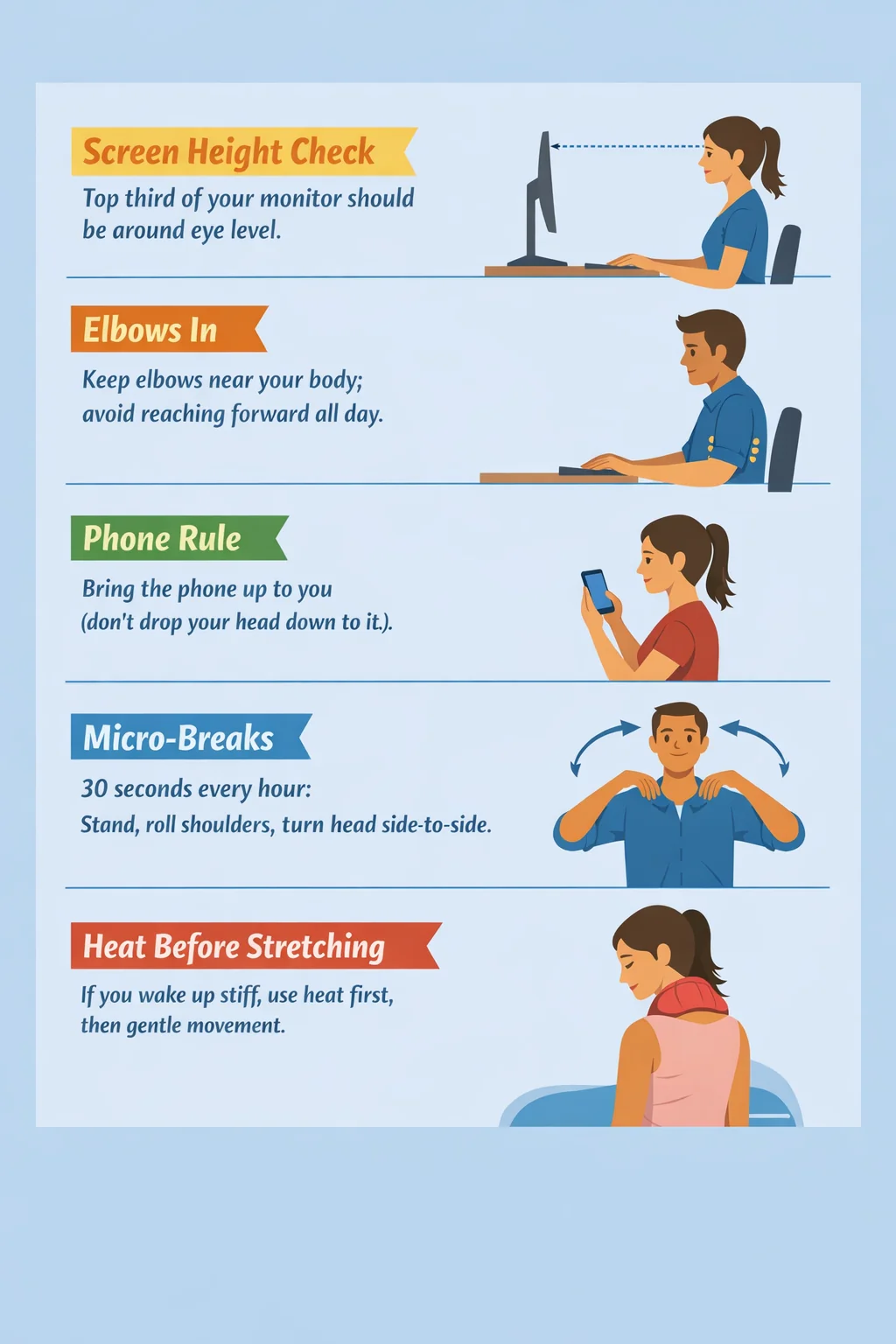
A simple February posture reset you can follow
Try these “realistic” changes (small wins matter):
Screen height check: Top third of your monitor should be around eye level.
Elbows in: Keep elbows near your body; avoid reaching forward all day.
Phone rule: Bring the phone up to you (don’t drop your head down to it).
Micro-breaks: 30 seconds every hour: stand, roll shoulders, turn your head gently side-to-side.
Heat before stretching: If you wake up stiff, use heat first, then gentle movement.
If you do these and symptoms still linger, that’s a sign you may need hands-on care plus a targeted rehab plan.
Why combining chiro + physical therapy + massage works so well
Posture pain usually isn’t one single issue. It’s commonly a mix of:
Joint stiffness (needs mobility work)
Muscle tightness (needs soft tissue treatment)
Weakness or endurance deficits (needs strengthening)
That’s why a combined approach can be so effective—especially for people who want long-term results, not temporary relief.
Posture care in Everett: next steps
If you’re in Everett or nearby and dealing with February neck pain, headaches, or upper back tightness, an evaluation can help pinpoint what’s driving your symptoms and what your body needs next—whether that’s chiropractic, physical therapy, massage therapy, or a combination.